
RESEARCH
For 15 years, I've researched the psychology of cybersecurity across academia, government, and industry, translating evidence into practical interventions.
Here's some of the research behind that approach.
Featured Highlights
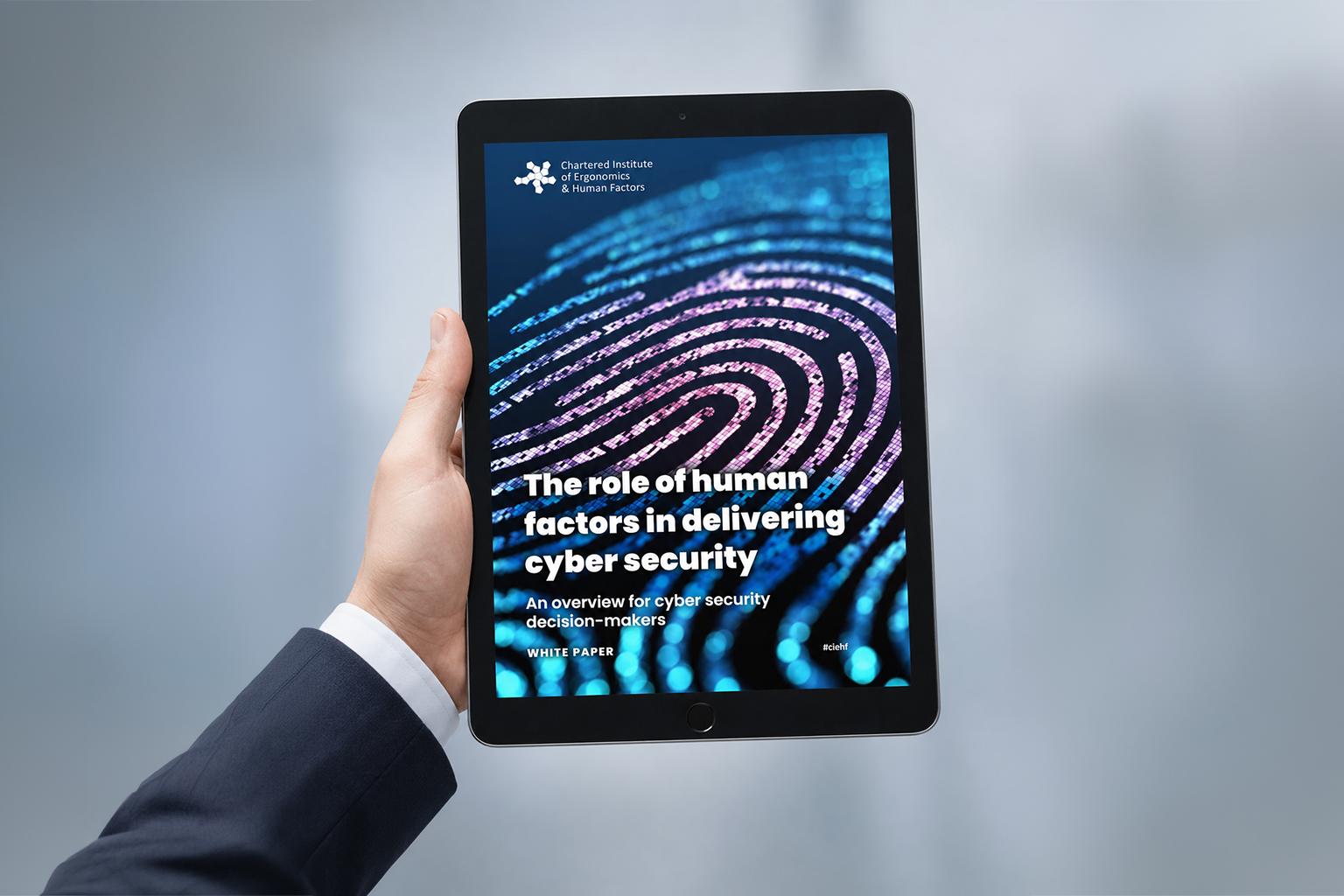
Co-authored with the Chartered Institute of Ergonomics & Human Factors
This paper promotes the adoption of a holistic systems perspective, taking account of the people within an organisation. It aims to give an understanding of human factors cyber security considerations and is designed to help organisational decision makers incorporate human factors into cyber security.
The role of human factors in delivering cyber security
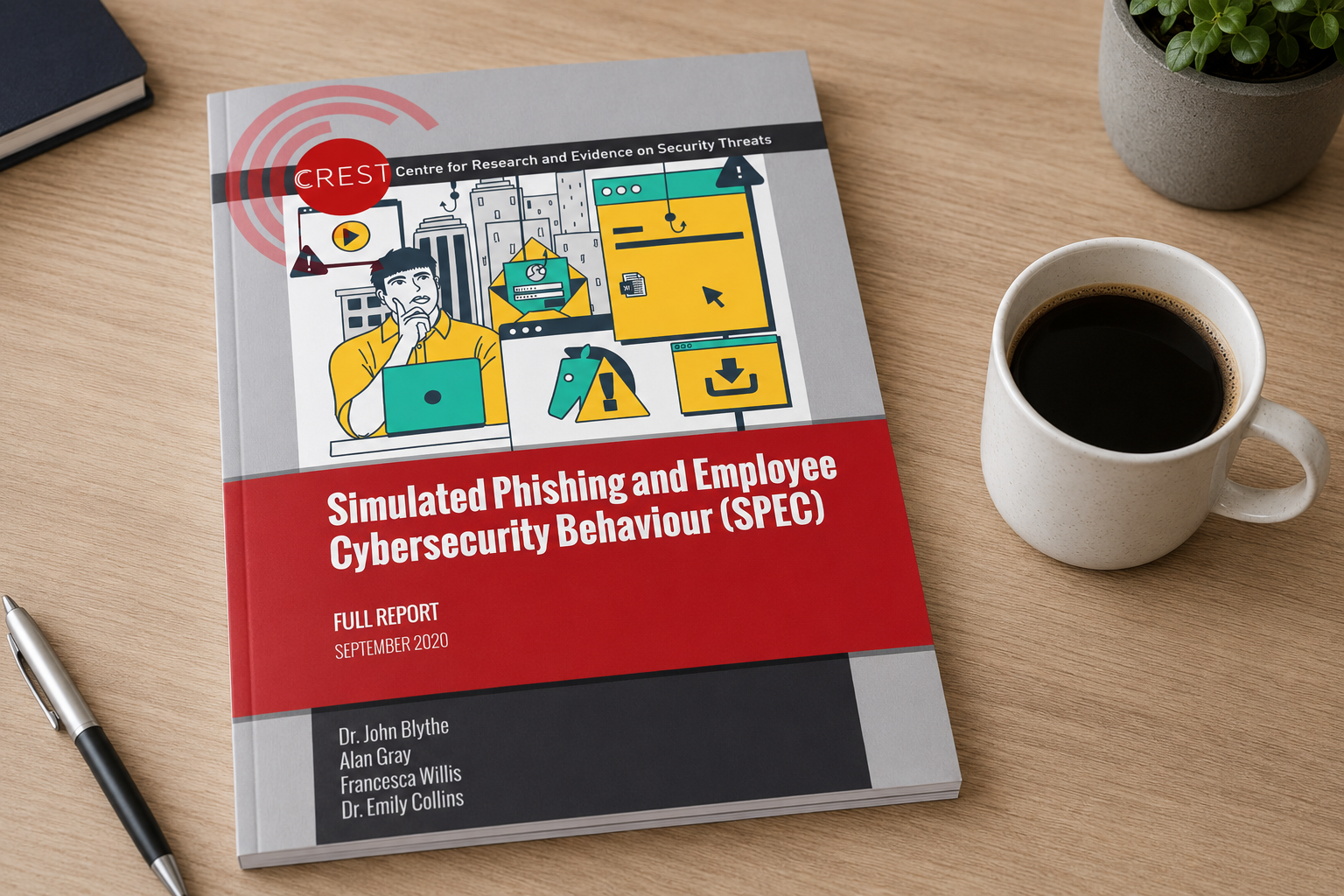
Simulated Phishing And Employee Cybersecurity Behaviour (SPEC)
Commissioned research by the Centre for Research and Evidence on Security Threats
Full report exploring how organisations use ‘carrots’ and ‘sticks’ to encourage security behaviour and experimental research looking at the impact of simulated phishing on trust and employee wellbeing.
Using behavioural insights to improve the public’s use of cyber security best practices
Funded by the Government Office for Science
Research exploring the behavioural insights of cyber security including facilitators and barriers to secure behaviours using MINDSPACE and nudging approaches.
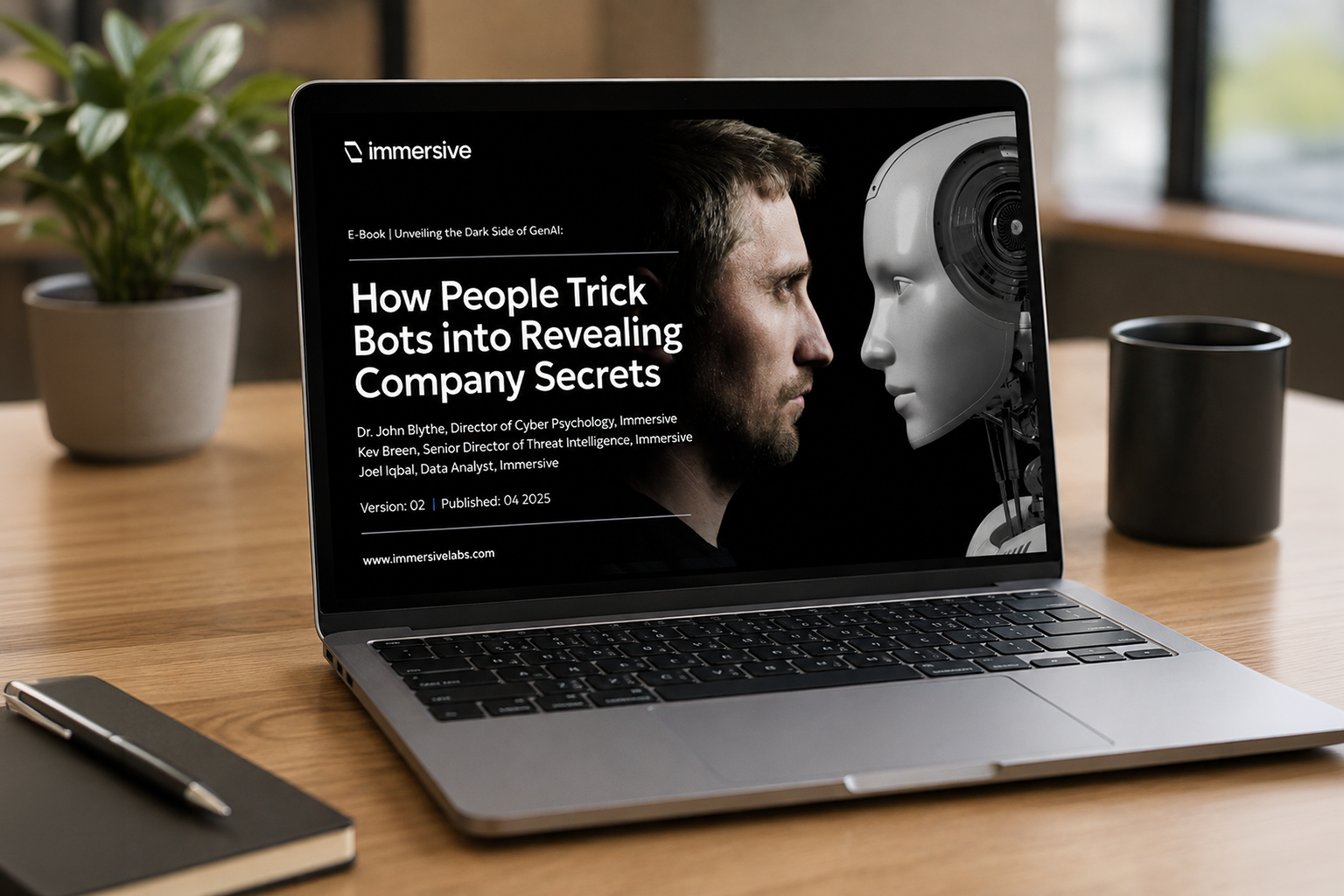
Unveiling the Dark Side of GenAI: How people trick bots into revealing company secrets
Research conducted at immersive labs exploring how end-users trick AI into revealing information. Covers the art of manipulation and how people creatively manipulate bots.
Journal Articles
Blythe, J., Brown, R., & Coventry, L. (2022). The Workplace Information Sensitivity Appraisal (WISA) scale. Computers in Human Behavior Reports, 8, Article 100240.
Brown, R., Coventry, L., Sillence, E., Blythe, J., Stumpf, S., Bird, J., & Durrant, A. C. (2022). Collecting and sharing self-generated health and lifestyle data: Understanding barriers for people living with long-term health conditions – a survey study. Digital Health, 8, Article 20552076221084458.
Blythe, J. M., & Johnson, S. D. (2021). A systematic review of crime facilitated by the consumer Internet of Things. Security Journal, 34(1), 97–125.
Blythe, J. M., Johnson, S. D., & Manning, M. (2020). What is security worth to consumers? Investigating willingness to pay for secure Internet of Things devices. Crime Science, 9(1), Article 1.
Johnson, S. D., Blythe, J. M., Manning, M., & Wong, G. T. W. (2020). The impact of IoT security labelling on consumer product choice and willingness to pay. PLOS ONE, 15(1), Article e0227800.
Sillence, E., Blythe, J. M., Briggs, P., & Moss, M. (2019). A revised model of trust in internet-based health information and advice: Cross-sectional questionnaire study. Journal of Medical Internet Research, 21(11), Article e11125.
Blythe, J. M., & Coventry, L. (2018). Costly but effective: Comparing the factors that influence employee anti-malware behaviours. Computers in Human Behaviour.
Coventry, L., Jeske, D., Blythe, J. M., Turland, J., & Briggs, P. (2016). Personality and Social Framing in Privacy Decision-Making: A Study on Cookie Acceptance. Frontiers in Psychology, 7, 1341.
Conference Proceedings & Chapters
Nurse, J. R. C., Williams, N., Collins, E., Panteli, N., Blythe, J., & Koppelman, B. (2021). Remote working pre- and post-COVID-19: An analysis of new threats and risks to security and privacy. HCI International 2021 - Posters, pp. 583–590.
Blythe, J. M., Gray, A., & Collins, E. (2020). Human cyber risk management by security awareness professionals: Carrots or sticks to drive behaviour change? HCI for Cybersecurity, Privacy and Trust, pp. 76–91.
Blythe, J. M., & Johnson, S. D. (2018). The consumer security index for IoT. Living in the Internet of Things: Cybersecurity of the IoT-2018, pp. 1-7.
Blythe, J. M., Coventry, L., & Little, L. (2015). Unpacking Security Policy Compliance: The Motivators and Barriers of Employees’ Security Behaviours. SOUPS 2015.
Blythe, J. M. (2013). Cyber security in the workplace: Understanding and promoting behaviour change. CHItaly 2013 Doctoral Consortium.
Blythe, J. M., & Coventry, L. (2012). Cyber security games: a new line of risk. Entertainment Computing-ICEC 2012, pp. 600-603.
Government & Policy Reports
UCL Dawes Centre for Future Crime. (2021). How secure is consumer IoT? Policy brief (https://www.ucl.ac.uk/engineering/future-crime/policy-briefs/policy-brief-how-secure-consumer-iot)
Department for Digital, Culture, Media & Sport. (2020). Rapid evidence assessment on labelling schemes for IoT security. GOV.UK.
Department for Digital, Culture, Media & Sport. (2020). Summary literature review of industry recommendations and international developments on IoT security. GOV.UK.
Coventry, L., Briggs, P., Blythe, J., & Tran, M. (2014). Using behavioural insights to improve the public’s use of cyber security best practices. Summary Report for Government Office for Science, 1-20.